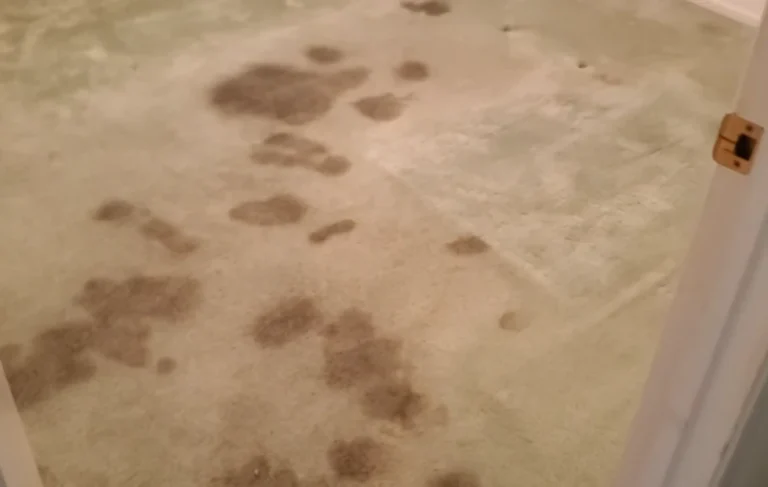
How to Remove Pet Stains From Carpet That Keep Coming Back
How to Remove Pet Stains From Carpet That Keep Coming Back
Direct answer: Pet stains keep coming back after cleaning because uric acid crystals from pet urine survive standard hot water extraction and steam cleaning. These crystals are insoluble in water. When moisture re-enters the carpet — from humidity, a spill, or another cleaning — the crystals rehydrate and release ammonia gas again. The only permanent fix is professional enzyme treatment that breaks uric acid at the molecular level, combined with UV blacklight inspection to identify every contaminated zone — not just the visible stains.
📄 In This Guide
- Why pet stains keep coming back — the science
- What standard cleaning misses every time
- UV blacklight inspection — why it matters in Medford
- The correct 5-step permanent removal process
- Why Medford humidity makes this worse
- DIY products vs professional enzyme treatment
- When to call a professional in Jackson County
- FAQ — pet stains carpet Medford OR
If you have cleaned a pet stain — or paid someone else to clean it — and the smell returned within days or weeks, you are experiencing one of the most frustrating carpet problems Jackson County homeowners report. The stain looks gone. The carpet smells fine immediately after cleaning. Then the odour comes back, often stronger than before, especially in warm weather or after rain.
This happens for a specific chemical reason that most cleaning methods — including many professional ones — do not address. This guide explains exactly why it happens and what the correct permanent fix is.
Why Pet Stains Keep Coming Back — The Science
Pet urine is not a single substance. It contains urea, creatinine, urobilin, bacteria, pheromones, and uric acid. Most of these compounds are water-soluble and are removed by standard cleaning. Uric acid is the exception.
The chemistry: Uric acid (C₅H₄N₄O₃) forms salt crystals when it dries in carpet fibres and backing. These crystals are insoluble in water and insoluble in the alkaline pre-spray solutions used by most carpet cleaners. Hot water extraction removes the water-soluble components of urine but leaves uric acid crystals bonded to carpet fibres, backing, and in many cases the underlay and subfloor beneath.
When moisture re-enters the carpet — from ambient humidity, a new spill, a wet shoe, or another cleaning cycle — the uric acid crystals rehydrate. As they rehydrate, they release the ammonia compounds that were locked inside them. This is the smell that returns. It is not residual urine. It is the same uric acid you thought was gone, reactivated by moisture.
In Medford, this cycle is particularly persistent because of the Rogue Valley’s humidity patterns. The Bear Creek valley retains moisture longer than drier inland Oregon locations, and the transition from dry summer to wet fall creates repeated rehydration cycles in carpet backing that was never fully decontaminated.
What Standard Cleaning Misses Every Time
Standard carpet cleaning — whether truck-mounted hot water extraction, portable machine cleaning, or steam cleaning — removes urea, bacteria, and surface soiling from pet accidents. It does not remove uric acid crystals because those crystals are chemically insoluble in the solutions these methods use.
This is not a quality problem with your cleaner. It is a chemistry problem. No amount of hot water, suction, or standard pre-spray dissolves uric acid crystals. The only chemistry that breaks uric acid is biological enzyme solution containing specific bacterial cultures that produce uricase — the enzyme that catalyses uric acid decomposition.
Beyond the chemistry issue, standard cleaning also misses the physical extent of contamination. Pet urine spreads further than the visible stain on the carpet surface. On a carpet with a 5-inch diameter visible stain:
- The actual urine contamination at the backing level is typically 15–20 inches in diameter
- In the underlay beneath the backing, contamination spreads further due to the sponge effect of foam or rubber underlay
- On subfloors, particularly timber subfloors, urine can soak 6–12mm into the wood grain
A cleaner treating only the visible stain addresses perhaps 20–25% of the actual contamination zone. The remaining 75–80% continues to rehydrate and off-gas ammonia every time moisture enters the area.
UV Blacklight Inspection — Why It Matters in Medford Homes
Uric acid phosphoresces under UV blacklight — it glows yellow-green when exposed to UV wavelengths in the 365nm range. This makes UV blacklight inspection the only reliable method for mapping the true extent of pet contamination in a carpet.
In Carpet Care Medford’s experience cleaning Jackson County homes, UV inspection consistently reveals 3–5 times more contamination than visual inspection alone. A living room that appeared to have two small cat urine spots under normal light showed seven separate contamination zones under UV, including two areas the homeowner had no knowledge of — old accidents that had dried invisible months or years earlier.
This matters for treatment because enzyme solution must be applied to every contaminated zone to achieve permanent odour elimination. Treating only visible stains while leaving UV-positive zones untreated means the missed zones continue to reactivate. The odour returns, and it often seems worse because the treated zones smell clean in contrast to the untreated ones.
The Correct 5-Step Permanent Removal Process
UV Blacklight Full Room Scan
Every room with suspected pet contamination is scanned under UV blacklight before any cleaning begins. All contamination zones are marked — not just visible stains. This creates the treatment map for the entire job.
Sub-Surface Moisture Probe
A moisture probe confirms how deep contamination has penetrated. If underlay or subfloor is affected, treatment protocol changes. Subfloor contamination that is not addressed will continue to off-gas through cleaned carpet indefinitely.
Enzyme Solution Applied by Contaminated Zone
Professional-grade enzyme solution containing uricase-producing bacterial cultures is applied to every UV-positive zone, not the whole room. The solution must saturate to the depth of contamination — surface application treats surface contamination only. Dwell time of 15–30 minutes minimum allows the enzymes to begin breaking down uric acid crystals.
195°F+ Extraction
Truck-mounted hot water extraction at 195°F+ removes the broken-down uric acid compounds along with the enzyme solution residue. The heat accelerates final enzyme activity in the extraction pass. pH rinse follows to restore carpet fibre pH balance.
Post-Treatment UV Verification
After extraction and drying, a second UV scan confirms treatment success. Properly treated zones no longer phosphoresce under UV. Any remaining UV-positive areas indicate incomplete enzyme penetration and require a second treatment pass before the job is complete.
Why Medford Humidity Makes Pet Stain Problems Worse
The Rogue Valley’s climate creates conditions that accelerate uric acid crystal rehydration cycles compared to drier Oregon locations. Medford receives 19.1 inches of annual rainfall according to NOAA climate data, with the majority falling between October and April. The Bear Creek valley floor retains moisture in soils and building materials longer than surrounding hillside elevations.
During Medford’s wet season, indoor relative humidity frequently reaches 60–70% in homes without active dehumidification. At this humidity level, uric acid crystals in carpet backing that were dormant through the dry summer begin to rehydrate continuously. This is why many Medford homeowners notice pet odour returning strongly in October and November even when they cleaned the carpet in spring.
DIY Products vs Professional Enzyme Treatment
| Product Type | Active Ingredient | Uric Acid Effectiveness | Penetration Depth |
|---|---|---|---|
| Store enzyme spray (Rocco & Roxie, Nature’s Miracle) | Enzyme blend | Surface only | 2–3mm |
| Baking soda + vinegar | None | Zero — does not break uric acid | Surface |
| Hydrogen peroxide | Oxidiser | Masks odour temporarily | Surface |
| Professional enzyme (commercial grade) | Uricase-producing bacteria | High | Full backing depth |
| Professional enzyme + HWE extraction | Uricase + heat + suction | Permanent | Backing + underlay |
🚫 Do not use hydrogen peroxide on coloured carpet. Hydrogen peroxide is an oxidising bleach. Applied to dyed carpet fibres, it causes permanent colour loss at the application point. The stain smell may reduce temporarily but the carpet is now also discoloured. This is one of the most common DIY pet stain mistakes in Medford homes.
Store-bought enzyme sprays contain enzyme concentrations far below professional-grade products. They are also designed for surface application only and do not penetrate to the backing depth where uric acid crystals are concentrated. They can reduce surface odour temporarily but do not achieve permanent elimination in cases where contamination has reached carpet backing or underlay.
When to Call a Professional Carpet Cleaner in Jackson County
Call a professional when any of the following apply:
- The smell has returned after two or more DIY cleaning attempts
- The accident is more than 24 hours old (uric acid crystals have already formed)
- You have a dog weighing over 20kg — urine volume penetrates backing and underlay in a single accident
- The affected area is larger than 12 inches in diameter
- You are preparing for a rental property inspection under ORS 90.300
- You have multiple pets or multiple historic accidents in the same area
For Medford rental properties, ORS 90.300 requires that carpet cleaning charges deducted from a security deposit be documented with a written invoice showing the pre-clean condition, treatment applied, and post-clean condition by room. An invoice from Carpet Care Medford includes UV findings by zone and the enzyme treatment record — documentation that satisfies ORS 90.300 requirements and is accepted in Jackson County small claims disputes.
🐶 Pet Stains Keeping Coming Back in Your Medford Home?
UV blacklight inspection reveals every contamination zone. Enzyme treatment by zone eliminates uric acid permanently. ORS 90.300 documentation on move-out cleans. Serving all of Jackson County — no travel fee.
Call (541) 646-7173 — Free Pet Stain AssessmentFAQ — Pet Stains Carpet Medford OR
Why does my carpet still smell like dog urine after professional cleaning?
Because the cleaning removed water-soluble urine components but left uric acid crystals in the carpet backing. Uric acid is insoluble in water and standard cleaning solutions. Only professional enzyme treatment with uricase-producing bacteria breaks uric acid crystals permanently. When moisture re-enters the carpet, untreated crystals rehydrate and release ammonia again.
How long does it take for enzyme treatment to work on pet stains?
Professional enzyme solution requires 15–30 minutes of dwell time before extraction for surface contamination. Deep contamination in underlay may require 45–60 minutes. The full permanent result is confirmed after the carpet dries completely — typically 2–4 hours in Medford summer conditions.
Can old pet stains be removed from carpet in Medford?
Yes in most cases. Uric acid crystals remain chemically active for years. Enzyme treatment breaks down old and new crystals equally. The limit is subfloor contamination — if urine has soaked into timber subfloor, the subfloor must be sealed with an odour-blocking primer before carpet re-installation, otherwise the odour migrates back through new carpet.
How much does professional pet stain removal cost in Medford, OR?
Carpet Care Medford charges $30–60 per affected room for enzyme treatment, added to the standard cleaning price from $110. The UV inspection is included at no extra charge. Price is locked in before we start — no surprise fees. Free assessment at (541) 646-7173.
Will the pet stain smell come back after enzyme treatment?
Not if treatment was applied to every UV-positive zone at the correct depth. Carpet Care Medford performs a post-treatment UV scan to confirm all zones are treated before leaving. If any zone re-phosphoresces under UV after drying, we treat it again at no additional charge under our 10-day guarantee.