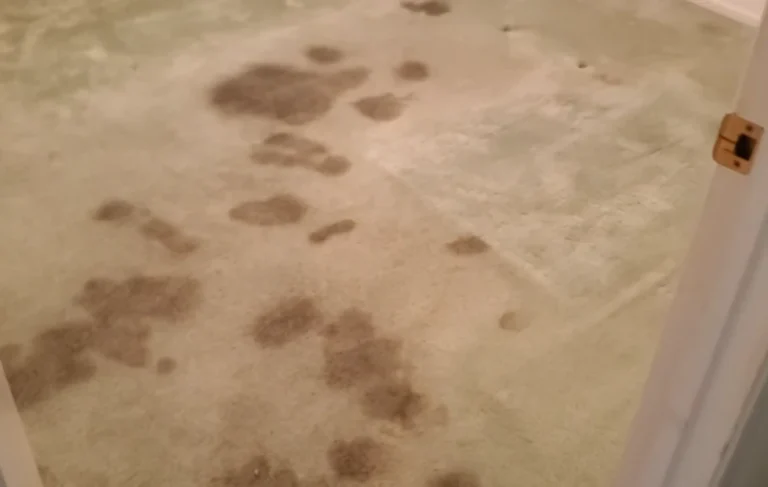
Pet Stains on Carpet Medford OR — Why the Smell Keeps Coming Back
Your dog had an accident three months ago. You cleaned it up the same day. You used the spray from the pet store. The carpet looked fine. Then a humid afternoon hit — and the smell came back like you’d never cleaned it at all.
This is the most common pet carpet problem we see in Medford homes. And it happens for a specific chemical reason that most cleaning products don’t address.
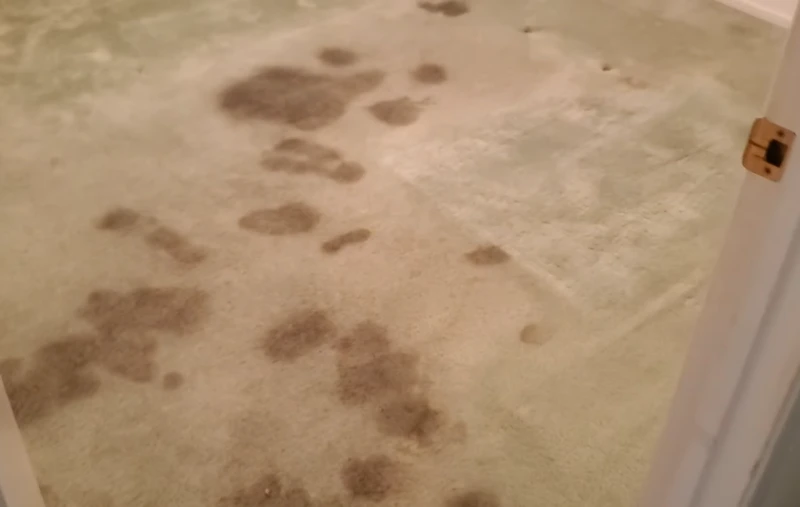
What Pet Urine Actually Is — And Why It’s Harder Than Any Other Stain
Pet urine is not just water. A 2026 study from Bayside Carpet Cleaning’s research team identifies the full composition: urea, creatinine, uric acid, sodium, potassium, urochrome (the yellow pigment), bacteria, hormones, and proteins.
Most of these compounds are water-soluble. When you blot and clean within the first 5 minutes, you can remove most of them. The problem is uric acid.
Why uric acid is the real problem: Uric acid is not water-soluble. It cannot be absorbed or rinsed away with water-based cleaning. When urine dries, the water evaporates, but uric acid forms crystals that bond to carpet fibres, backing, and padding. Soap, vinegar, and baking soda address the water-soluble fraction. The uric acid crystals stay. When humidity rises or moisture is reintroduced — from cleaning, from Medford’s wet season rain tracking in on shoes — the crystals reactivate and release the ammonia smell again.
The Timeline of a Pet Accident — Why Speed Matters
Most Medford homeowners don’t realise how quickly urine moves through carpet. Here’s what happens minute by minute:
| Time After Accident | What’s Happening in Your Carpet | Can You Still Fix It? |
|---|---|---|
| 0–5 minutes | Urine still primarily liquid on surface and first layer of pile | Yes — blot immediately, do not rub |
| 5–30 minutes | Liquid spreading horizontally through backing, beginning to reach padding | Yes — still treatable but harder |
| 30 min – 24 hours | Water-soluble fraction evaporating, uric acid beginning to crystallise | Needs enzyme treatment — vinegar won’t work |
| 24 hours – weeks | Uric acid crystals fully formed and bonded to fibres and padding | Needs professional UV inspection + enzyme treatment |
| Months – years | Crystals deeply embedded in padding and possibly subfloor. Bacteria multiplied. | Professional treatment — possibly pad replacement |
UV Blacklight — The Tool That Changes Everything
Here is something most Medford homeowners don’t know until they see it: pet urine is invisible under normal light. Old stains that have dried look exactly like clean carpet to the naked eye. You could have contamination in six spots in one room and only know about two of them.
UV blacklight (ultraviolet light) causes urine proteins and uric acid to fluoresce — they glow bright yellow-green under UV. We scan every room with a blacklight before touching any carpet. This inspection reveals the full picture: how many spots, how large they are, and whether contamination has spread beyond the original accident area.
🔍 What UV Inspection Finds That You Can’t See
In a typical Medford home with two dogs, UV inspection reveals 3–5x more contaminated area than the homeowner knew about. This matters because if you only treat the visible spots, the smell returns from the untreated areas. UV inspection is the difference between treating the whole problem and just treating what you know about. We do it on every pet odor job at no extra charge.
What Enzyme Treatment Actually Does — In Plain Language
Enzyme cleaners are the only product category that specifically addresses uric acid crystals. A 2026 guide from PetBench explains the mechanism clearly: enzymatic cleaners deposit bacteria or isolated enzymes that break organic residues — including urine proteins and uric acid — into smaller pieces that can evaporate or rinse out.
The process works in four stages:
- Application: Enzyme solution is applied generously — enough to reach the same depth the urine reached, including padding if needed
- Dwell time: Enzymes need 10–20 minutes of damp contact with the uric acid crystals to break them down. Rushing this step is why DIY enzyme cleaners often fail
- Extraction: Once the uric acid is broken down, hot water extraction removes the dissolved compounds from the carpet
- Neutralisation: Final rinse ensures no enzyme residue or odour-causing byproducts remain
⚠ Do not do this: Do not apply vinegar to a urine stain before enzyme cleaner. Vinegar’s acidity deactivates enzymes. Do not use hot water first on a fresh urine stain — heat sets protein-based stains permanently. Do not steam clean over urine before enzyme treatment for the same reason.
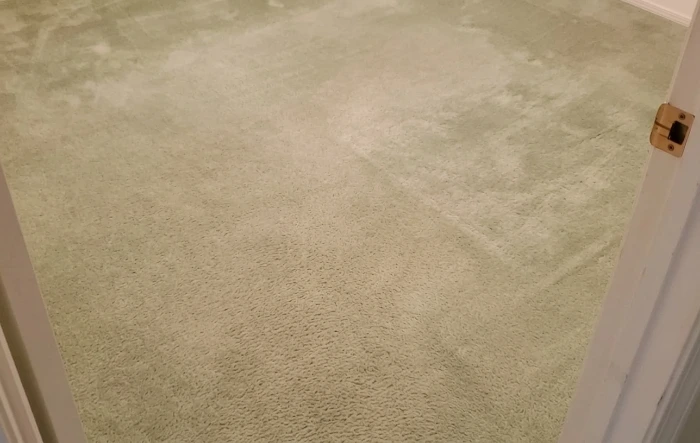
When DIY Doesn’t Work — Signs You Need Professional Treatment
Store-bought enzyme cleaners work well for fresh, single accidents caught within 30 minutes. They consistently fail in four situations that are common in Medford homes:
- The accident wasn’t caught quickly and uric acid has fully crystallised
- There are multiple accidents in the same area from repeat marking — the contamination has reached the padding
- The carpet was cleaned with the wrong product first (vinegar, baking soda, or steam) which set the stain
- The smell returns every time it rains or humidity rises — meaning uric acid is still present despite previous cleaning attempts
The sign that contamination has reached the padding is the clearest indicator that professional treatment is needed. Carpet padding is porous foam. It absorbs urine readily and holds it beneath the carpet surface. No amount of surface cleaning removes contamination from the padding — the carpet has to be treated from above with enough enzyme solution to penetrate all the way through.
Pad Replacement — When It’s Necessary and When It’s Not
This is the question we get most often: does the padding need to be replaced? Honest answer: sometimes, but less often than people fear.
Padding replacement is needed when: contamination is extensive across a large area, the padding has structural deterioration from moisture, or multiple years of repeat accidents have built up beyond what enzyme treatment can address.
Padding does NOT need replacement when: accidents are isolated to 1–3 spots, the carpet was cleaned professionally within a reasonable time of the accidents, and there’s no structural padding damage.
We assess this at UV inspection and give you an honest answer. If replacement is necessary, we tell you before we start — not after we’ve taken your money for a clean that won’t fix the underlying problem.
2026 Trend: What’s Changed in Pet Odor Removal
The carpet cleaning market hit $3.01 billion in 2026, with pet-related cleaning driving a significant portion of residential demand. Two specific changes in 2026 are relevant to Medford pet owners.
First, professional homes with pets are now recommended to clean every 6–9 months rather than the previous 12-month standard — driven by research showing that uric acid crystal accumulation in high-traffic pet homes accelerates carpet fibre degradation faster than previously understood.
Second, UV blacklight inspection has moved from optional to standard practice at professional services. As recently as 2022 it was an add-on service. In 2026 it is included on every pet odor job because the inspection data consistently reveals contamination that changes the treatment plan.
What It Costs — Pet Odor Removal in Medford OR
In Medford, professional pet odor removal pricing depends on the extent of contamination found at UV inspection:
- Single room, isolated spots: $80–$140
- Multiple rooms, moderate contamination: $140–$240
- Whole home with extensive contamination: $240–$380
- Padding replacement (if needed): $2–$4 per square foot additional
The CRI’s 2026 data shows that homes with pets that clean professionally every 6–9 months avoid the $3,000–$8,000 carpet replacement cost that typically results from deferred pet contamination treatment. The math is not complicated.
ORS 90.300 — What Medford Renters and Landlords Need to Know
46.6% of Medford households rent (US Census 2020). Pet odor is the number one cause of security deposit disputes in Jackson County. Under Oregon ORS 90.300, a landlord can deduct carpet cleaning costs from a security deposit if the rental agreement includes a cleaning clause and the carpet was cleaned before the tenant moved in.
Every professional pet odor treatment we do includes written documentation: UV blacklight findings by room, contamination zones mapped, chemistry applied, and pre/post condition noted. This documentation is accepted in Oregon landlord-tenant deposit proceedings — it’s the same standard used by Oregon courts.
Frequently Asked Questions — Pet Odor Removal in Medford
Why does the pet smell come back after I clean it myself?
Because uric acid is not water-soluble. Vinegar, baking soda, and most spray cleaners address the water-soluble compounds in urine — they remove the surface stain. But uric acid crystals bond to carpet fibres and padding and cannot be removed by water-based cleaning. When moisture or humidity reintroduces moisture, the crystals reactivate and release the ammonia odour again. Only enzyme treatment breaks uric acid at the molecular level.
How do I know if the smell is coming from the carpet or the padding underneath?
If the smell returns within a few days of cleaning — even after a thorough surface clean — the contamination has reached the padding. Padding is porous foam that holds urine below the carpet surface. Surface cleaning cannot reach it. UV blacklight inspection shows the extent of saturation and helps determine whether padding replacement is needed or whether deep enzyme treatment through the carpet is sufficient.
Can old pet stains from years ago be removed?
Often yes — with professional treatment. Old uric acid crystals that have been in carpet for months or years are harder to break down than fresh ones and typically need multiple enzyme applications with longer dwell time. We assess at UV inspection and give you an honest estimate of what’s achievable. In some cases where contamination is very old and extensive, we’ll recommend spot treatment plus pad replacement rather than promising a result we can’t deliver.
Is professional pet odor treatment safe for my dogs and cats?
Yes. The enzyme chemistry we use is pH-balanced, non-toxic, and specifically designed for use in homes with pets and children. Enzyme cleaners work by biological breakdown — not harsh chemicals. We do ask that you keep pets off the treated carpet for 2–4 hours while it dries, for their comfort as much as anything. Once dry it is completely safe.
Do you provide documentation for rental property pet damage?
Yes. Every pet odor job includes ORS 90.300 compliant written documentation: UV blacklight findings by room with contamination zones mapped, chemistry applied, pre and post condition assessment per area. This documentation is accepted in Oregon landlord-tenant deposit dispute proceedings in Jackson County courts. Call (541) 646-7173 to discuss your specific rental property situation.
How soon can you reach our Medford home for pet odor removal?
We’re based at 914 W Main St, Medford OR 97501 and serve all Medford ZIP codes 97501 and 97504 as our primary zone. Same-day and next-day scheduling is available. Call (541) 646-7173 before noon for best same-day availability. No travel surcharge for any Medford address.
Related Services in Medford
Pet Odor Removal in Medford — UV Inspection Included Free
We find what you can’t see. Enzyme treatment, 200°F+ extraction, ORS 90.300 documentation available. Same-day scheduling across Medford 97501 and 97504.
📞 Call (541) 646-7173 — Free Estimate